HomeOur evidence
Tools for your game. Tools for your life.
Where our ideas come from
Hoop Matter is an athlete development toolkit for 10 to 14 year olds. Every tool in it is built on published research and the experience of people who work with young athletes every day. This page lists the research behind it, so parents, coaches and clubs can see exactly where our ideas come from.
An honest note on the evidence.
Hoop Matter is evidence informed. The research below was mostly done with older athletes, adults or general youth groups, and no controlled trial has yet tested a program like this with 10 to 14 year old basketballers. We use the research to shape how each tool works, and we are careful not to promise more than it shows.
Why Hoop Matter exists
Many young Australians leave sport early. In a 2024 survey of 1,007 parents, 3 in 10 said their child had asked to stop playing out-of-school sport, and a quarter of 12 to 15 year olds had already stopped. Parents also said that encouragement and feeling their family is proud of them help children stay (Allianz Australia, 2024). Hoop Matter is built to give young players reasons to stay in the game that do not depend on the scoreboard.
How the program is designed
Reflection only helps when it ends in action. A study of competitive athletes found that understanding yourself, not just thinking about yourself, was linked to lower stress. That is why every journal prompt finishes with “My next move” (Cowden & Meyer-Weitz, 2016).
Life skills have to be taught on purpose. Skills like goal setting and handling feedback do not move from the court into school and home on their own. They transfer when they are taught deliberately and linked to life outside sport (Gould & Carson, 2008; Pierce et al., 2017).
The adults around young athletes matter. Coaches, parents and teammates shape what young people gain from sport (Holt et al., 2017). That is why the planner and card deck include guidance for the adult in the room.
You Matter: values and strengths
The What Matters card deck uses a values card sort, a method first developed for use in counselling (Miller et al., 2001). Values are treated as directions you choose, not goals you tick off (Hayes et al., 2012), an approach that has also been applied in sport (Gardner & Moore, 2004).
Every strength has a cost when overplayed. Each strength card names what happens when you lean on it too hard, drawing on research into overused strengths (Kaiser & Overfield, 2011).
Who you are is bigger than your sport. Young athletes who build their whole identity around one sport, without exploring other parts of themselves, can find it harder when sport changes, through injury, selection or simply growing up (Brewer & Petitpas, 2017). That is why the Second List runs through the whole program.
Values can shift as you grow. A study that followed 382 children from age 10 found that values were fairly stable over two years, but some grew in importance as children got older (Vecchione et al., 2020). That is why we suggest doing the card sort again each season.
Goals that work. Specific, challenging goals tend to lift effort and performance more than “do your best” (Locke & Latham, 2002). The SMART checklist, which comes from management rather than youth research, helps make a goal specific (Doran, 1981). Deciding in advance when, where and how you will act, an “if-then” plan, makes people far more likely to follow through (Gollwitzer, 1999). Every goal in the journal ends with one.
Calm and focus. Mindfulness programs give young people small but real benefits (Zoogman et al., 2015). Our breathing practice uses a longer breath out than in; a study with adults found that a few minutes a day of exhale-focused breathing lifted mood more than mindfulness meditation alone (Balban et al., 2023). It has not yet been tested with children.
Gratitude. Early adolescents who wrote down things they were grateful for over two weeks reported more gratitude, optimism and satisfaction with school (Froh et al., 2008). That is where the planner’s “one good thing” comes from.
Health Matter: load, warm-up and hydration
The hours check. A study of 1,190 young athletes found that those training more organised hours per week than their age in years had about twice the odds of a serious overuse injury (Jayanthi et al., 2015). A longer follow-up study supported the same pattern (Jayanthi et al., 2020). The planner uses this as a prompt for a conversation with a coach or parent, not as a rule.
The Matter Warm-up is based on a youth basketball warm-up program that reduced ankle and knee injuries by about a third (Emery et al., 2022).
The hydration colour chart uses a urine colour scale developed in sport science research (Armstrong et al., 1994).
Measuring progress
The Hoop Matter Check-In uses five clearly labelled answer points, which suit how children answer surveys (Borgers et al., 2000; Borgers et al., 2004), and follows the format of a validated life skills scale for sport (Cronin & Allen, 2017). Answers are framed as “how true is this for you” (Bandura, 2006).
At the end, players also rate how things were at the start. People often rate their starting point differently once they understand a skill better, and asking twice gives a fairer picture of change (Howard & Dailey, 1979; Pratt et al., 2000; Drennan & Hyde, 2008). Parent and player answers often differ, and we treat that difference as useful information (De Los Reyes et al., 2015).
What we do not claim
Gratitude and burnout. Research links gratitude with lower burnout in athletes, but those studies show a connection, not a cause (Chen & Kee, 2008; Guo et al., 2022). The planner’s “one good thing” is there because it is a good habit, not because it protects against burnout.
Body awareness training. Research on body awareness in athletes compares groups at one point in time, and no trials show that training it improves sport performance (Seabury et al., 2023). We make no claim about it.
Images and design
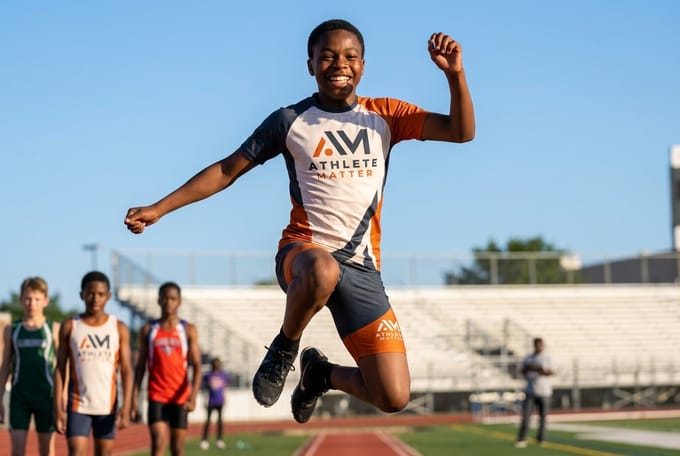
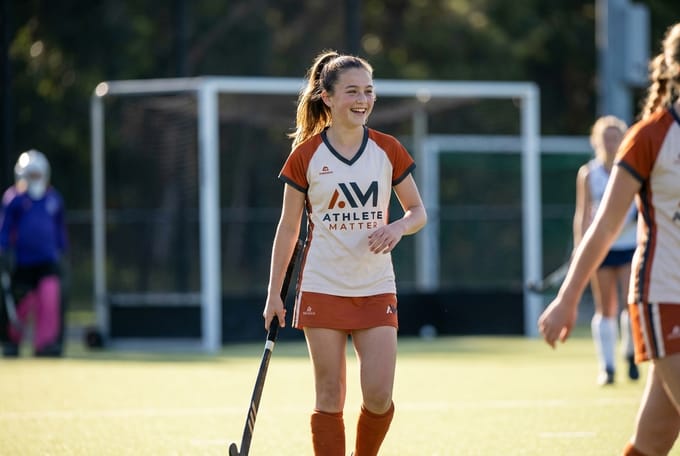
Some young athletes appear in the Matter Minis video series. They take part with the written consent of a parent or guardian, in line with our child safe policy. Other athlete images and the drill demonstration videos on this site and in our free downloads are AI-generated illustrations, not photographs of real children. Our typeface is Poppins, used under the SIL Open Font License.
References
- Allianz Australia. (2024, July 4). Research reveals a third of Aussie kids planning to drop out of sport [Media release]. https://www.allianz.com.au/about-us/media-hub/aussie-kids-drop-out-of-sport.html
- Armstrong, L. E., Maresh, C. M., Castellani, J. W., Bergeron, M. F., Kenefick, R. W., LaGasse, K. E., & Riebe, D. (1994). Urinary indices of hydration status. International Journal of Sport Nutrition, 4(3), 265-279. https://doi.org/10.1123/ijsn.4.3.265
- Balban, M. Y., Neri, E., Kogon, M. M., Weed, L., Nouriani, B., Jo, B., Holl, G., Zeitzer, J. M., Spiegel, D., & Huberman, A. D. (2023). Brief structured respiration practices enhance mood and reduce physiological arousal. Cell Reports Medicine, 4(1), Article 100895. https://doi.org/10.1016/j.xcrm.2022.100895
- Bandura, A. (2006). Guide for constructing self-efficacy scales. In F. Pajares & T. Urdan (Eds.), Self-efficacy beliefs of adolescents (Vol. 5, pp. 307-337). Information Age Publishing.
- Borgers, N., de Leeuw, E., & Hox, J. (2000). Children as respondents in survey research: Cognitive development and response quality. Bulletin of Sociological Methodology, 66(1), 60-75. https://doi.org/10.1177/075910630006600106
- Borgers, N., Hox, J., & Sikkel, D. (2004). Response effects in surveys on children and adolescents: The effect of number of response options, negative wording, and neutral mid-point. Quality & Quantity, 38(1), 17-33. https://doi.org/10.1023/B:QUQU.0000013236.29205.a6
- Brewer, B. W., & Petitpas, A. J. (2017). Athletic identity foreclosure. Current Opinion in Psychology, 16, 118-122. https://doi.org/10.1016/j.copsyc.2017.05.004
- Chen, L. H., & Kee, Y. H. (2008). Gratitude and adolescent athletes' well-being. Social Indicators Research, 89(2), 361-373. https://doi.org/10.1007/s11205-008-9237-4
- Cowden, R. G., & Meyer-Weitz, A. (2016). Self-reflection and self-insight predict resilience and stress in competitive tennis. Social Behavior and Personality, 44(7), 1133-1150. https://doi.org/10.2224/sbp.2016.44.7.1133
- Cronin, L. D., & Allen, J. (2017). Development and initial validation of the Life Skills Scale for Sport. Psychology of Sport and Exercise, 28, 105-119. https://doi.org/10.1016/j.psychsport.2016.11.001
- De Los Reyes, A., Augenstein, T. M., Wang, M., Thomas, S. A., Drabick, D. A. G., Burgers, D. E., & Rabinowitz, J. (2015). The validity of the multi-informant approach to assessing child and adolescent mental health. Psychological Bulletin, 141(4), 858-900. https://doi.org/10.1037/a0038498
- Doran, G. T. (1981). There's a S.M.A.R.T. way to write management's goals and objectives. Management Review, 70(11), 35-36.
- Drennan, J., & Hyde, A. (2008). Controlling response shift bias: The use of the retrospective pre-test design in the evaluation of a master's programme. Assessment & Evaluation in Higher Education, 33(6), 699-709. https://doi.org/10.1080/02602930701773026
- Emery, C. A., Owoeye, O. B. A., Räisänen, A. M., Befus, K., Hubkarao, T., Palacios-Derflingher, L., & Pasanen, K. (2022). The “SHRed Injuries Basketball” neuromuscular training warm-up program reduces ankle and knee injury rates by 36% in youth basketball. Journal of Orthopaedic & Sports Physical Therapy, 52(1), 40-48. https://doi.org/10.2519/jospt.2022.10959
- Froh, J. J., Sefick, W. J., & Emmons, R. A. (2008). Counting blessings in early adolescents: An experimental study of gratitude and subjective well-being. Journal of School Psychology, 46(2), 213-233. https://doi.org/10.1016/j.jsp.2007.03.005
- Gardner, F. L., & Moore, Z. E. (2004). A mindfulness-acceptance-commitment-based approach to athletic performance enhancement: Theoretical considerations. Behavior Therapy, 35(4), 707-723. https://doi.org/10.1016/S0005-7894(04)80016-9
- Gollwitzer, P. M. (1999). Implementation intentions: Strong effects of simple plans. American Psychologist, 54(7), 493-503. https://doi.org/10.1037/0003-066X.54.7.493
- Gould, D., & Carson, S. (2008). Life skills development through sport: Current status and future directions. International Review of Sport and Exercise Psychology, 1(1), 58-78. https://doi.org/10.1080/17509840701834573
- Guo, Z., Yang, J., Wu, M., Xu, Y., Chen, S., & Li, S. (2022). The associations among athlete gratitude, athlete engagement, athlete burnout: A cross-lagged study in China. Frontiers in Psychology, 13, Article 996144. https://doi.org/10.3389/fpsyg.2022.996144
- Hayes, S. C., Strosahl, K. D., & Wilson, K. G. (2012). Acceptance and commitment therapy: The process and practice of mindful change (2nd ed.). Guilford Press.
- Holt, N. L., Neely, K. C., Slater, L. G., Camiré, M., Côté, J., Fraser-Thomas, J., MacDonald, D., Strachan, L., & Tamminen, K. A. (2017). A grounded theory of positive youth development through sport based on results from a qualitative meta-study. International Review of Sport and Exercise Psychology, 10(1), 1-49. https://doi.org/10.1080/1750984X.2016.1180704
- Howard, G. S., & Dailey, P. R. (1979). Response-shift bias: A source of contamination of self-report measures. Journal of Applied Psychology, 64(2), 144-150. https://doi.org/10.1037/0021-9010.64.2.144
- Jayanthi, N. A., LaBella, C. R., Fischer, D., Pasulka, J., & Dugas, L. R. (2015). Sports-specialized intensive training and the risk of injury in young athletes: A clinical case-control study. American Journal of Sports Medicine, 43(4), 794-801. https://doi.org/10.1177/0363546514567298
- Jayanthi, N., Kliethermes, S., Dugas, L., Pasulka, J., Iqbal, S., & LaBella, C. (2020). Risk of injuries associated with sport specialization and intense training patterns in young athletes: A longitudinal clinical case-control study. Orthopaedic Journal of Sports Medicine, 8(6), Article 2325967120922764. https://doi.org/10.1177/2325967120922764
- Kaiser, R. B., & Overfield, D. V. (2011). Strengths, strengths overused, and lopsided leadership. Consulting Psychology Journal: Practice and Research, 63(2), 89-109. https://doi.org/10.1037/a0024470
- Locke, E. A., & Latham, G. P. (2002). Building a practically useful theory of goal setting and task motivation: A 35-year odyssey. American Psychologist, 57(9), 705-717. https://doi.org/10.1037/0003-066X.57.9.705
- Miller, W. R., C'de Baca, J., Matthews, D. B., & Wilbourne, P. L. (2001). Personal values card sort [Measurement instrument]. University of New Mexico. https://casaa.unm.edu/assets/inst/personal-values-card-sort-2.pdf
- Pierce, S., Gould, D., & Camiré, M. (2017). Definition and model of life skills transfer. International Review of Sport and Exercise Psychology, 10(1), 186-211. https://doi.org/10.1080/1750984X.2016.1199727
- Pratt, C. C., McGuigan, W. M., & Katzev, A. R. (2000). Measuring program outcomes: Using retrospective pretest methodology. American Journal of Evaluation, 21(3), 341-349. https://doi.org/10.1177/109821400002100305
- Seabury, T., Benton, D., & Young, H. A. (2023). Interoceptive differences in elite sprint and long-distance runners: A multidimensional investigation. PLOS ONE, 18(1), e0278067. https://doi.org/10.1371/journal.pone.0278067
- Vecchione, M., Schwartz, S. H., Davidov, E., Cieciuch, J., Alessandri, G., & Marsicano, G. (2020). Stability and change of basic personal values in early adolescence: A 2-year longitudinal study. Journal of Personality, 88(3), 447-463. https://doi.org/10.1111/jopy.12502
- Zoogman, S., Goldberg, S. B., Hoyt, W. T., & Miller, L. (2015). Mindfulness interventions with youth: A meta-analysis. Mindfulness, 6(2), 290-302. https://doi.org/10.1007/s12671-013-0260-4
Questions about our sources: [email protected]
Keep exploring
From the research to the court.
Child safety comes first
We work with young people, so we follow the NSW Child Safe Standards. Everyone who works with us is screened, trained and signs our Code of Conduct.
To raise a concern, email [email protected]. If a child is in immediate danger, call 000.
Athlete Matter acknowledges the Awabakal and Worimi peoples, Traditional Custodians of the land on which we work, and pays respect to Elders past and present.